

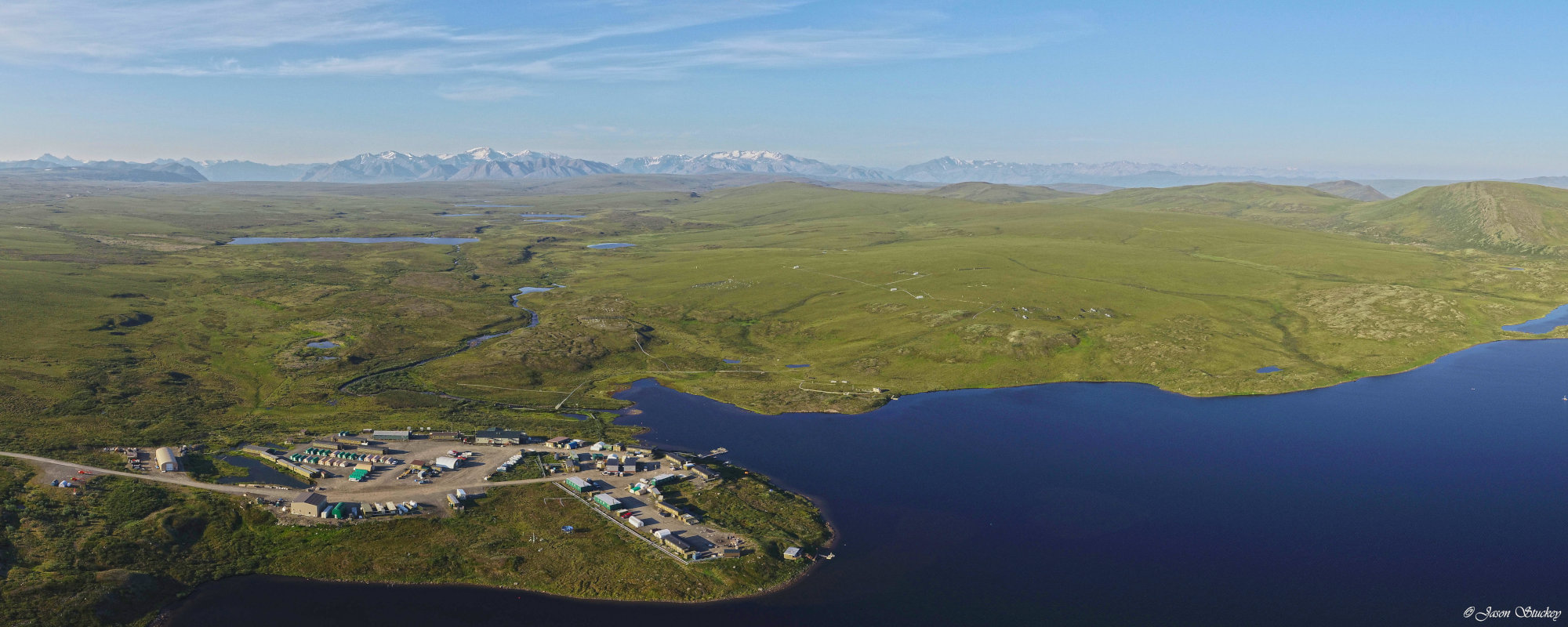
 Toolik Field Station is life on the wildside! The Weather is made up and the season doesn't matter! You'll
never be able to guess what the next day will be like. Wildlife of all sorts pass
through or make the area their home. Plants of all sorts litter the great country
side. No where else will you find such a hodgepodge of life in one place. Just remember
to stay away from the wolves! They're not tamed just yet.
Toolik Field Station is life on the wildside! The Weather is made up and the season doesn't matter! You'll
never be able to guess what the next day will be like. Wildlife of all sorts pass
through or make the area their home. Plants of all sorts litter the great country
side. No where else will you find such a hodgepodge of life in one place. Just remember
to stay away from the wolves! They're not tamed just yet.
 Our plant phenology program, begun in 2007, monitors the timing of certain developmental
stages within the plant community commonly found in moist acidic tussock and dry heath
tundra. It is an examination of the development and timing of commonly occurring plant
species and how they are affected by a changing climate. Download data from 2007-2017
with the links on the right.
Our plant phenology program, begun in 2007, monitors the timing of certain developmental
stages within the plant community commonly found in moist acidic tussock and dry heath
tundra. It is an examination of the development and timing of commonly occurring plant
species and how they are affected by a changing climate. Download data from 2007-2017
with the links on the right.
Clicking a link on the right fills this section with content
Bears
Cats
Deer
Foxes and Wolves
Hares
Use this guide to learn about the mammals seen at and around TFS. The sighting graphs
show (a) the length of the stay for species regularly seen at TFS, (b) the spring
arrival and fall departure dates for species migrating past TFS and (c) the sporadic
occurrences of species occasionally encountered at TFS.