
Bees
Buzzing with bees

JUNE 2013 - Katie Spellman and Christa Mulder want to know which plants bees like best, invasive weeds or native berries. Weed seeds hang onto tire treads or hitch a ride on pant legs to find new territories, but these plants also have a combination of traits that allow them to outcompete native species.
During research for her UAF master’s project, Spellman investigated the movement of invasive plant species into areas burned by a record-breaking amount of wildfires in 2004. “I noticed white sweetclover (Melilotus albus) was the most abundant species along roadsides near the burns and that the sweet clover patches were just buzzing with bees.”
Blueberries and lowbush cranberries come back vigorously after fires, but they require insect pollination to produce fruit. Avid berry pickers themselves, Spellman and her advisor, Mulder, wondered whether the invasive white sweetclover might impact the berry production.
“We set up a big experiment where we added flowering sweetclover – very carefully so as to not start an invasion – to blueberry and lowbush cranberry patches and looked at how the pollination and berry production changed in those patches. We got some very interesting and surprising results.”
The researchers found that the invasive plants were acting like a magnet, drawing the pollinators away from the berry flowers. What they didn’t know was which parts of Alaska actually had long periods of flowering overlap.
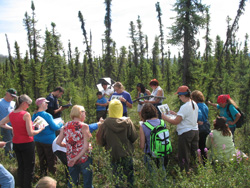
For answers, the researchers turned to the Herbarium at the University of Alaska Museum of the North and to citizen scientist volunteers.
People collect plants for the herbarium when they are in flower and easiest to identify. All the specimens are associated with a location and a date and can be linked to historical climate data from the nearest climate station. “These pressed and dried plant specimens are prepared on archival paper to give them a lifespan of centuries,” Collection Manager Jordan Metzgar said.
" The herbarium has more than 22,000 lichens, mosses, and vascular plants that thoroughly characterize the flora of Alaska and adjacent regions of Canada and the Russian Far East. The specimens can also be accessed in the online database, Arctos.”
The herbarium has more than 22,000 lichens, mosses, and vascular plants that thoroughly characterize the flora of Alaska and adjacent regions of Canada and the Russian Far East.
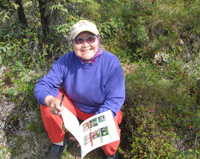
This archive gave the researchers a good idea of when cranberry, blueberry, and white sweet clover flowered in the past. They also needed to know how berry and sweetclover flowering overlaps in the present, so they asked volunteers to adopt five blueberry, lowbush cranberry, or white sweetclover plants and watch them as they progress from bud to fruit.
Last summer, 89 volunteers monitored 50 different sites across Alaska.
Spellman and Mulder found that cranberry typically has a longer period of overlap with white sweet clover than blueberry does. This kind of data can hint at which berry picking regions could be most vulnerable to the impacts of invasive plants.
Formal and informal educators who want to get involved in a plant monitoring project can take a one-credit professional development course with UAF Summer Sessions called “Invasive Plants of Alaska for Educators” from June 24-26.
Anyone interested in helping monitor berries or invasive plants can contact Spellman at katie.spellman@alaska.edu.