
About UAMN Space Outreach
 NASA Heliophysics Education Activation Team
UAMN is a partner in the NASA Heliophysics Education Activation Team (HEAT) (formerly NSSEC: National Space Science Education Consortium).
NASA HEAT connects audiences across the nation to the innovative and captivating science of heliophysics. From nationwide educational programming to community-centric projects, NASA HEAT is actively partnering with museums, youth organizations, classroom teachers, and many others to teach people about our closest star, the Sun, and how it affects our lives.
UAMN focuses our efforts in NASA HEAT on:
- Connecting afterschool and out-of-school educators to resources and training
- Partnerships with Alaska community organizations (schools, libraries, museums, youth organizations)
- Space science outreach through community science nights and family programs
- Serving minority audiences, including rural Alaskans
NASA HEAT supported under cooperative agreement number NNH15ZDA004C.
Interior Alaska Space Outreach
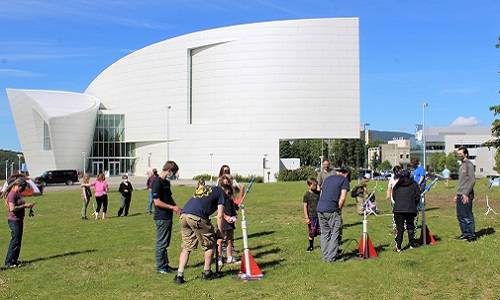
Presented by Dr. Walt and Marita Babula.
Beginning in 2020 with new funding, UAMN expanded opportunities for Fairbanks area and Interior Alaska residents to explore space science.
The first annual Starblazer Museum Camp (formerly called Museum Space Camp), presented by Dr. Walt and Marita Babula, took place in June 2021. Starblazer Museum Camp has occurred annually since.
UAMN also offers a wide variety of space-related learning opportunities, including
family programs and virtual content. Check our calendar and Virtual Museum page.
National Informal STEM Education Network
UAMN is a member of the National Informal STEM Education Network (NISE Net), a community of informal educators and scientists dedicated to supporting
learning about science, technology, engineering, and math (STEM) across the United
States.
Through NISE Net, UAMN receives Explore Science: Earth & Space toolkits, and shares the activities at public events such as Science Potpourri, Museum Sleepover, and more.
Planetarium at UAMN
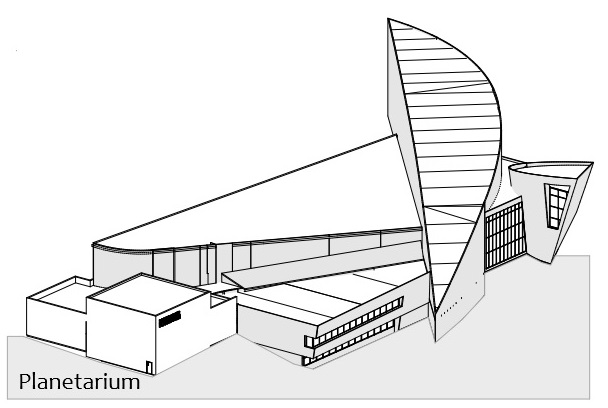
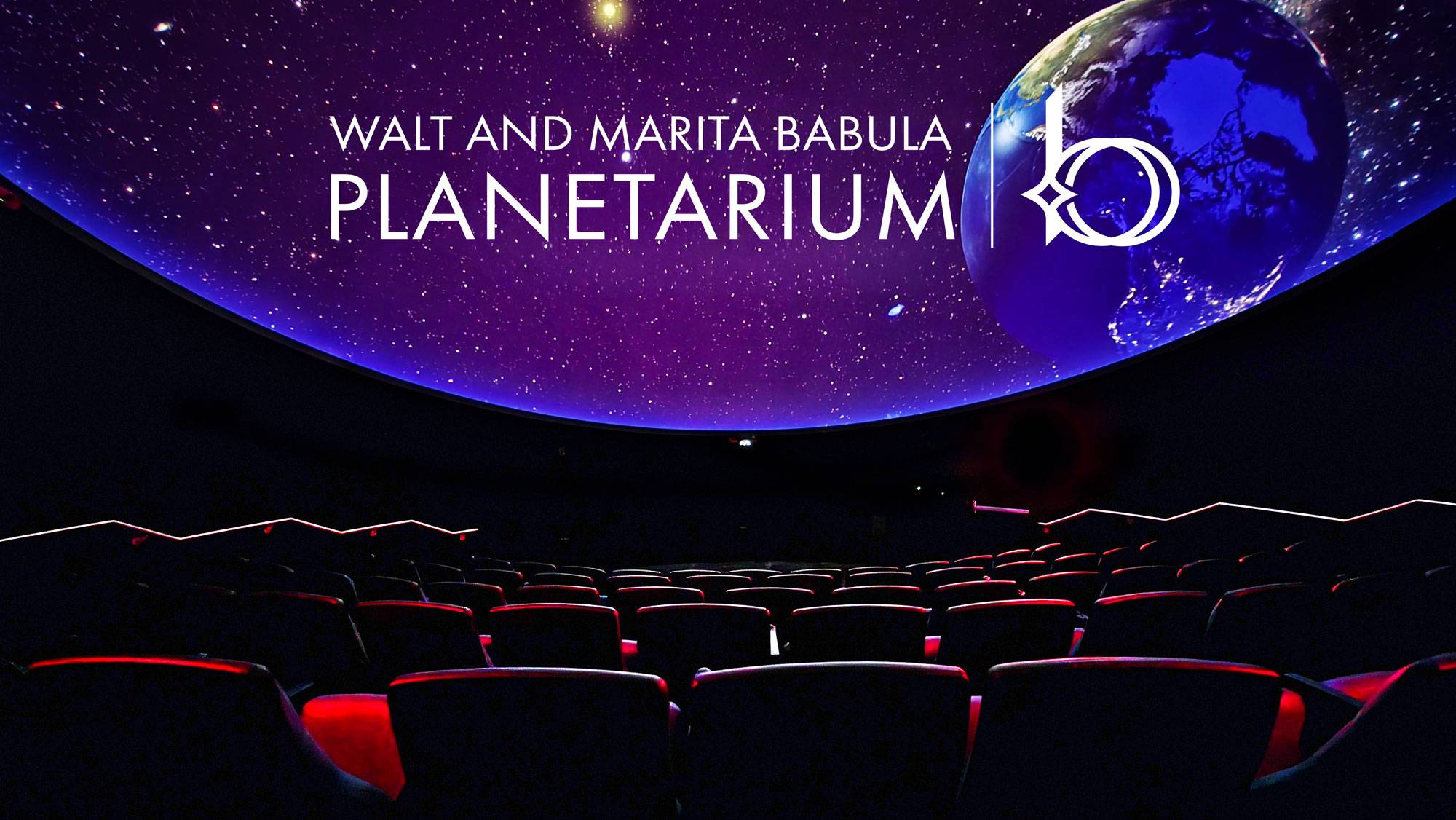
We are excited about the upcoming planetarium addition!
The Walt & Marita Babula Planetarium will open in spring 2026.
Learn more here.
Portable Planetarium History
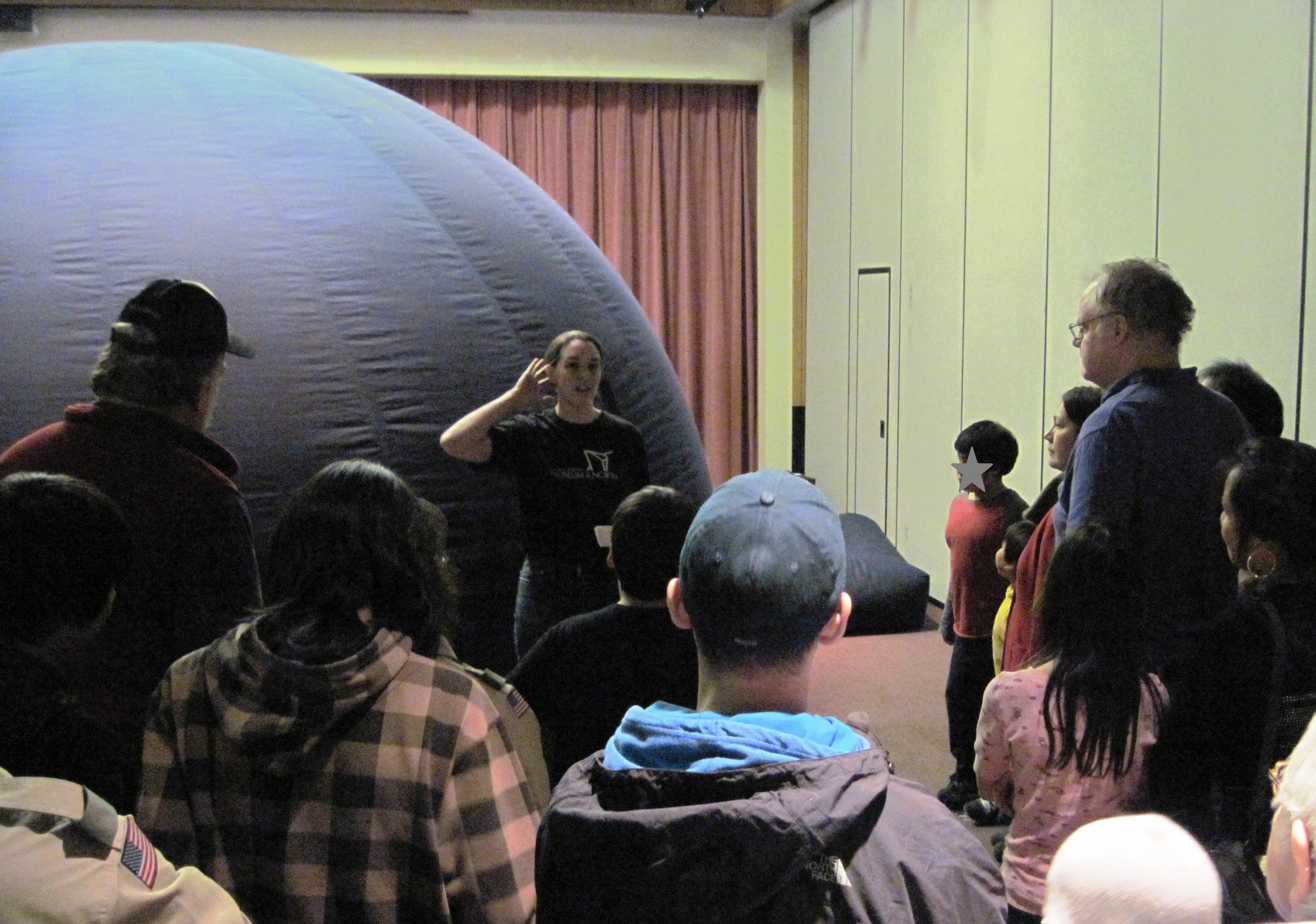
The UA Museum of the North and UAF's Geophysical Institute teamed up to bring the state's only digital portable planetarium to communities in rural Alaska. Funding from NASA in 2009, made it possible to expand the reach across the state. Project leads were Dr. Robert Herrick, planetary sciences professor and Dr. Laura Conner, former museum education director.

The UA Museum of the North developed grade level specific shows for Alaskan students and wrote Starry Night scripts for the planetarium community. In addition to school planetarium shows, teacher packets and activities and shows for community science nights were developed and shared. UAMN traveled and led portable planetarium outreach from 2008-2012, serving 43 communities across the state and reaching 17,000 people.
Communities served:
|
|
|
- NASA grant sends digital planetarium to rural Alaska.
- Elementary Student Knowledge Gains In The Digital Portable Planetarium
Journal of Astronomy & Earth Sciences Education, v2 n2, December 2015.
The Geophysical Institute now schedules and presents portable planetarium presentations.
This project was funded under NASA cooperative agreement NNX16AL65A and cooperative agreement number NNH15ZDA004C. Any opinions, findings, and conclusions or recommendations expressed in this material are those of the author(s) and do not necessarily reflect the views of the National Aeronautics and Space Administration.